
Residential Driveways
Asphalt Driveway Repair or Replacement? A Rochester Homeowner’s Guide
Learn when asphalt driveway repair, resurfacing, or replacement may be appropriate for a Rochester-area property and what factors should guide the decision.
· 7 min read
- #asphalt repair
- #crack filling
- #driveway sealcoating
- #Rochester NY
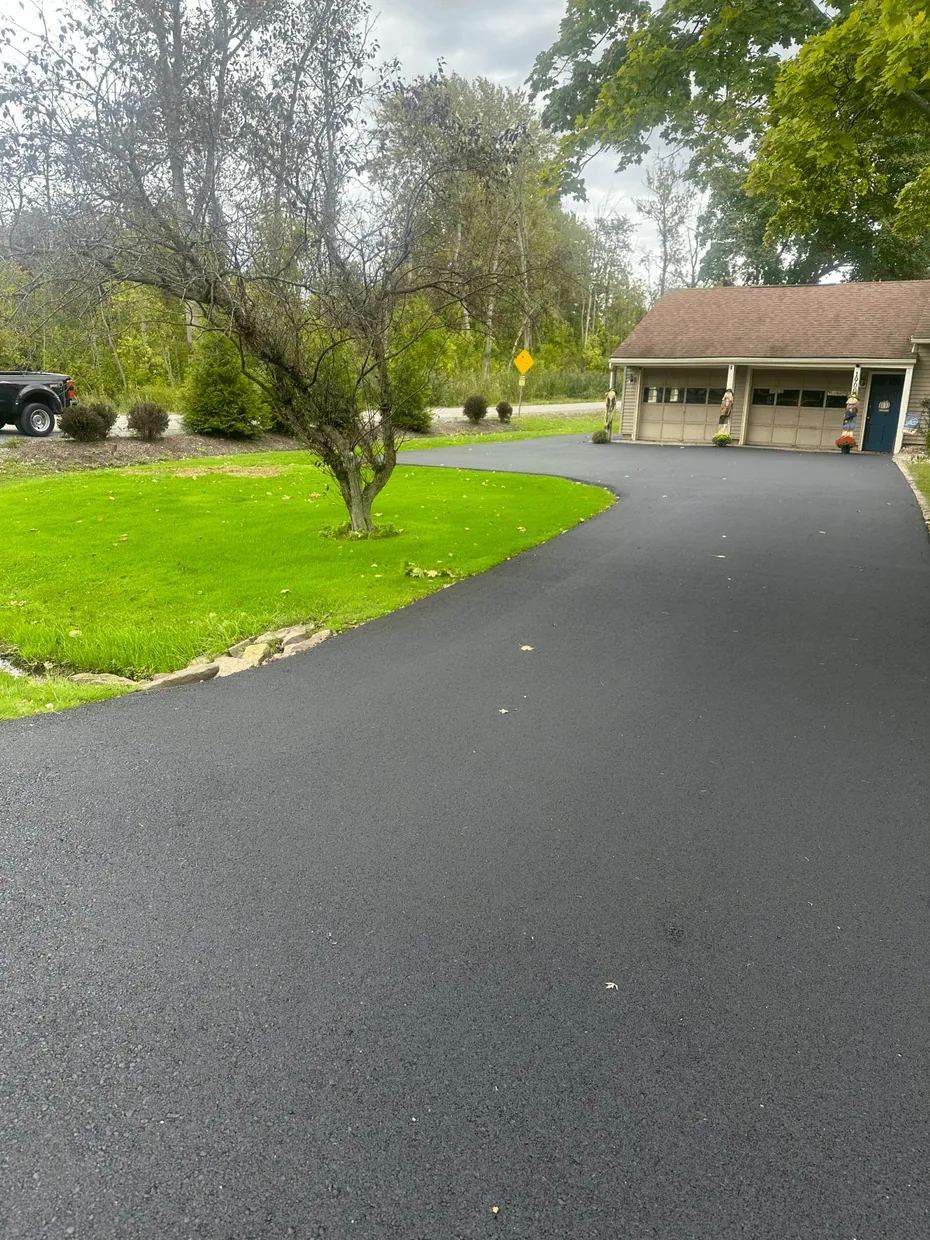
Cracks, potholes, settling, and worn surfaces do not all call for the same solution. Some asphalt driveways can be maintained with timely crack filling or localized repairs. Others may be candidates for resurfacing, while pavement with widespread deterioration or an unstable base may need full replacement. The right choice depends on the condition of the entire pavement system—not only the most visible damaged area.
This guide explains the main options for homeowners in Rochester and surrounding Monroe County communities. An on-site evaluation is still important because drainage, grading, base stability, pavement age, and the extent of deterioration all affect the recommended work.
When localized asphalt repair may be appropriate
Repair may be practical when damage is limited to a specific area and the surrounding pavement remains stable. Potholes, isolated failed sections, and certain surface breaks can often be removed and patched without replacing the complete driveway.
A repair should address the cause where possible. If water, poor drainage, or a weakened base caused the failure, placing new asphalt over the visible damage alone may not prevent the problem from returning. Learn more about asphalt repair and patching.
What crack filling can and cannot do
Suitable cracks can allow water to enter the pavement structure. In the Rochester area, repeated freezing and thawing may enlarge openings and contribute to additional deterioration. Timely asphalt crack filling can help limit water intrusion and slow avoidable damage.
Crack filling is a maintenance treatment, not a structural correction. It cannot stabilize a failed base, reverse extensive settling, or restore pavement that has broken into many interconnected pieces. Those conditions require a broader evaluation.
When resurfacing may be an option
Resurfacing places a new asphalt layer over a properly prepared existing surface. It may be considered when the main deterioration is in the surface layer and the supporting base remains stable. Preparation can include cleaning, repairing failed areas, correcting transitions, and milling where needed.
Resurfacing is not suitable for every driveway. Widespread movement, drainage problems, extensive base failure, or severe deformation may transfer through a new overlay. A site assessment helps determine whether resurfacing would provide a sound result.
Signs that driveway replacement should be considered
Full replacement removes the existing pavement so the underlying conditions can be addressed before new asphalt is installed. Replacement may be considered when deterioration is widespread or when the base, grading, or drainage needs substantial correction.
- Large areas of interconnected cracking
- Repeated failures after earlier patches
- Extensive settling, heaving, or uneven pavement
- Persistent drainage or standing-water problems
- A weak or unstable base
- Damage affecting much of the driveway rather than one isolated section
Read more about the preparation and installation involved in residential driveway paving and replacement.
Where sealcoating fits into the plan
Sealcoating is a protective maintenance layer for asphalt that is in suitable condition. It can help reduce surface weathering and restore a dark, even appearance, but it does not repair potholes, correct drainage, or rebuild failed pavement. Cracks and damaged sections should be evaluated and repaired before sealcoat is applied.
New asphalt also needs time to cure before it is sealcoated. The appropriate timing depends on the pavement and conditions, so the surface should be assessed rather than coated immediately after installation. Explore residential driveway sealcoating.
How Rochester weather affects asphalt decisions
Asphalt in Western New York is exposed to rain, snow, ice, changing temperatures, and repeated freeze-thaw cycles. Water management is therefore central to paving and maintenance decisions. Open cracks, low areas, poorly supported edges, and drainage directed toward the driveway can all contribute to deterioration.
Homeowners can help by watching for new cracks, keeping pavement edges supported, addressing drainage concerns, and arranging an evaluation before isolated damage spreads. Our asphalt maintenance resources offer additional care guidance.
Start with the condition of the whole driveway
The most cost-effective option is the one that addresses the actual condition of the pavement. A small repair is valuable when damage is truly localized. Resurfacing can be useful when the base remains sound. Replacement is often the better long-term approach when structural problems are extensive.
Tandoi Asphalt & Sealcoating provides driveway paving, repair, crack filling, and sealcoating in Rochester and communities across Monroe County. Request a free estimate to have your pavement evaluated and discuss the appropriate next step.